Skip to content

Please note

This page is written for clinicians and readers of the work. Reading it, or contacting me about it, does not create a therapist and client relationship, and nothing here is clinical advice for your situation or for anyone in your care.

Writing

Writing


Books, essays, and the Psycholytic Perspectives series by Alan Romano, LCSW.

The writing collected here explores psychotherapy, Functional Systems Regulation Theory, psychedelic and psycholytic therapy, mental health, addiction, and the broader cultural systems that shape human distress and healing.

Books and Functional Systems Regulation Theory.

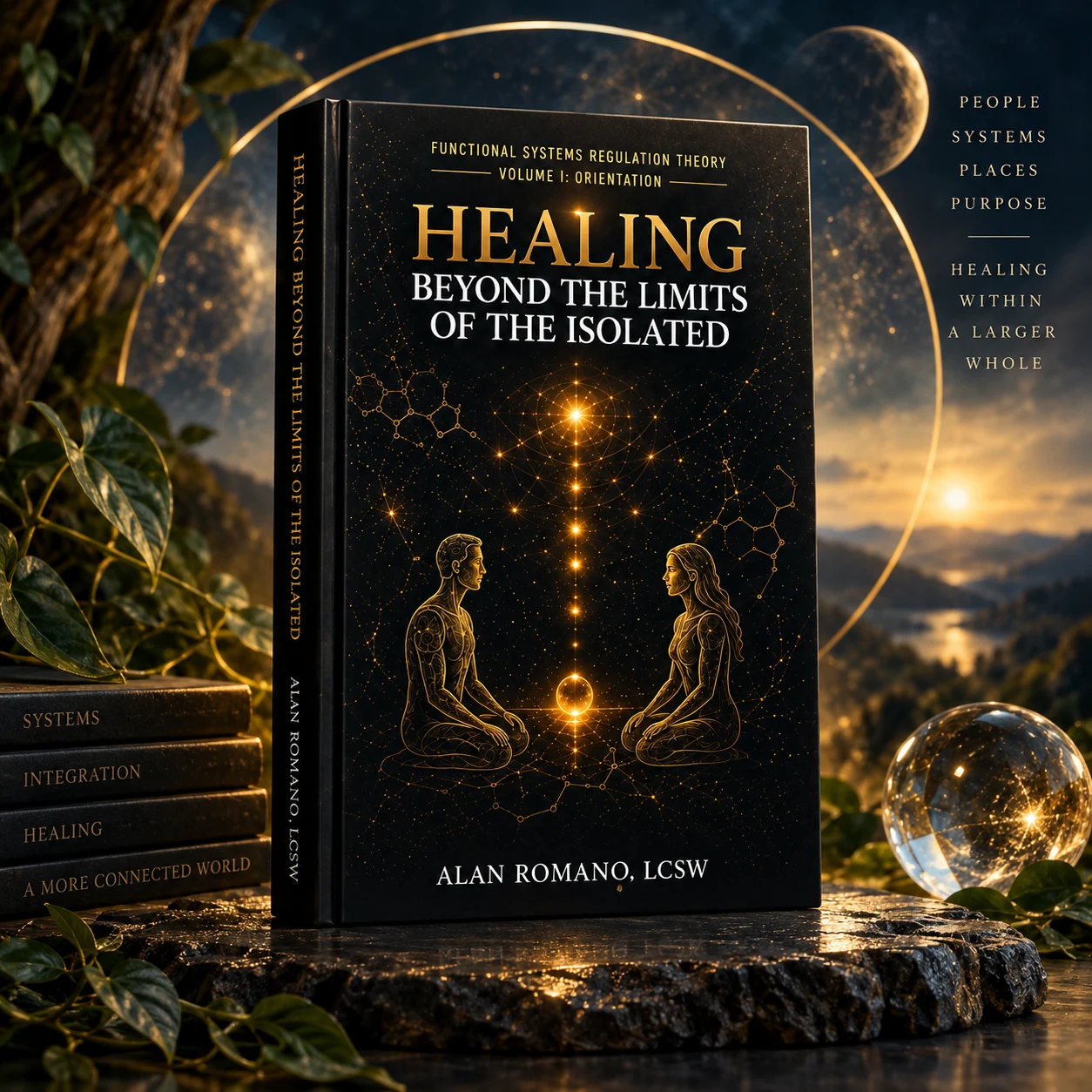
Cover of Healing Beyond the Limits of the Isolated: Functional Systems Regulation Theory, Volume I, by Alan Romano, LCSW

Published

Healing Beyond the Limits of the Isolated

Functional Systems Regulation Theory, Volume I: Orientation

The long-form argument against treating regulation as an individual competence, and the first full statement of the nested-systems account that organizes the clinical work. Regulation is developed as an emergent property of systems in contact, the nervous system, relationships, environment, and broader social and cultural contexts, rather than a skill a bounded individual either has or lacks.

In development

Volume II: The Living Field

The next work, currently in development, taking up what the first volume set aside: the field itself, the relational and environmental conditions that decide what a nervous system is required to do. It is being written now, and no publication date is being stated.

About the book

Psycholytic Perspectives.

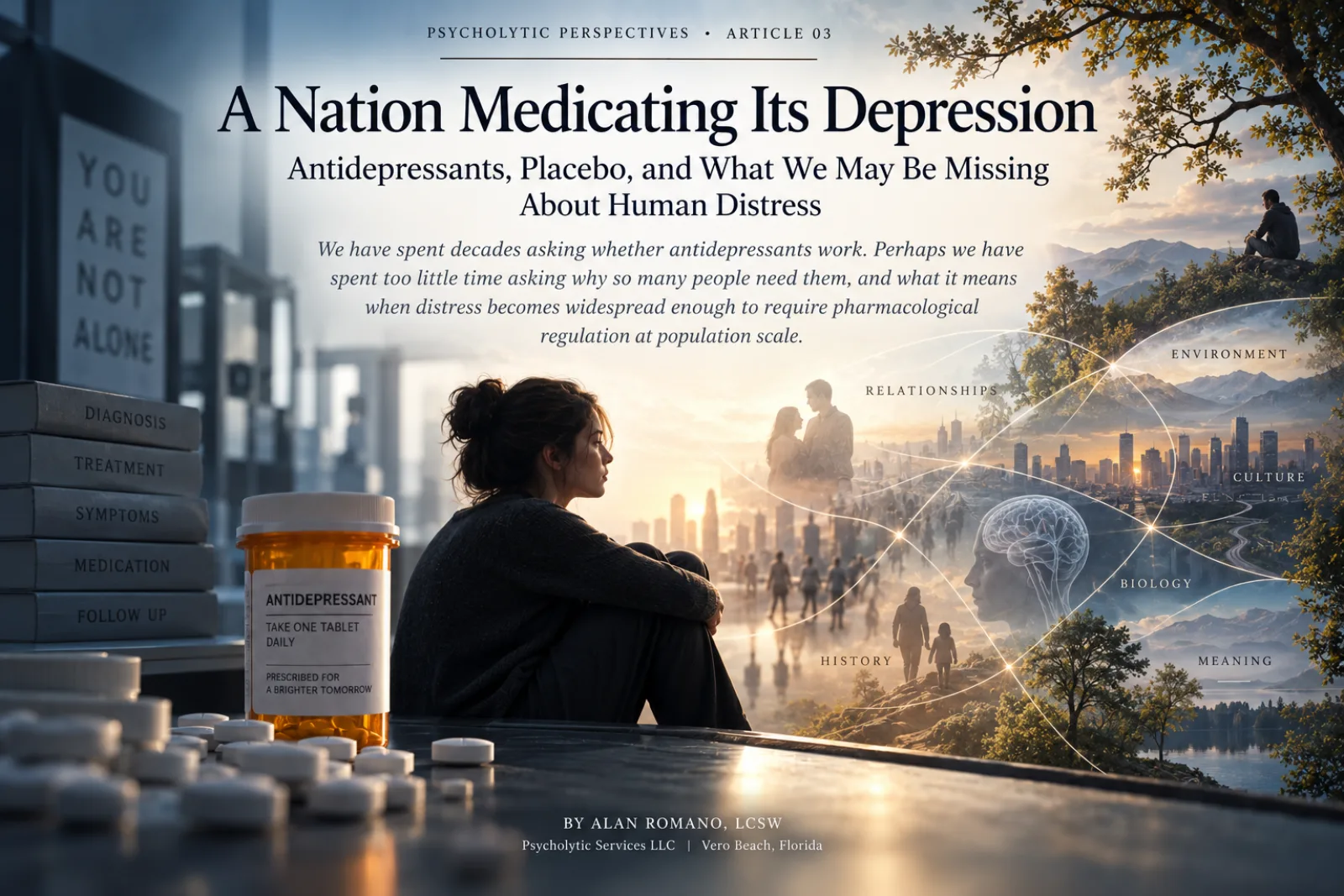
An ongoing series examining mental health, medicine, culture, psychedelics, psychotherapy and human suffering through a systems-oriented lens. The series challenges some conventional assumptions about pathology and treatment while exploring what symptoms and distress may be communicating about the larger systems people live in.

Selected essays and articles.

Cover art for Psycholytic and Psychedelic Therapy: A Continuum of Experience, showing a glowing human figure in a field of light

Psycholytic and Psychedelic-Assisted Therapy: A Continuum of Experience

Not two treatments but one continuous range, varying in intensity, in how much conversation remains available, and in how far attention turns inward.

Read Article
A blue human silhouette in profile with its nervous system drawn as branching tree roots

When Anxiety Is the Nervous System Trying to Protect You

Why anxiety can continue when you know you are safe, and what changes when it is read as an organized protective response.

Read Article
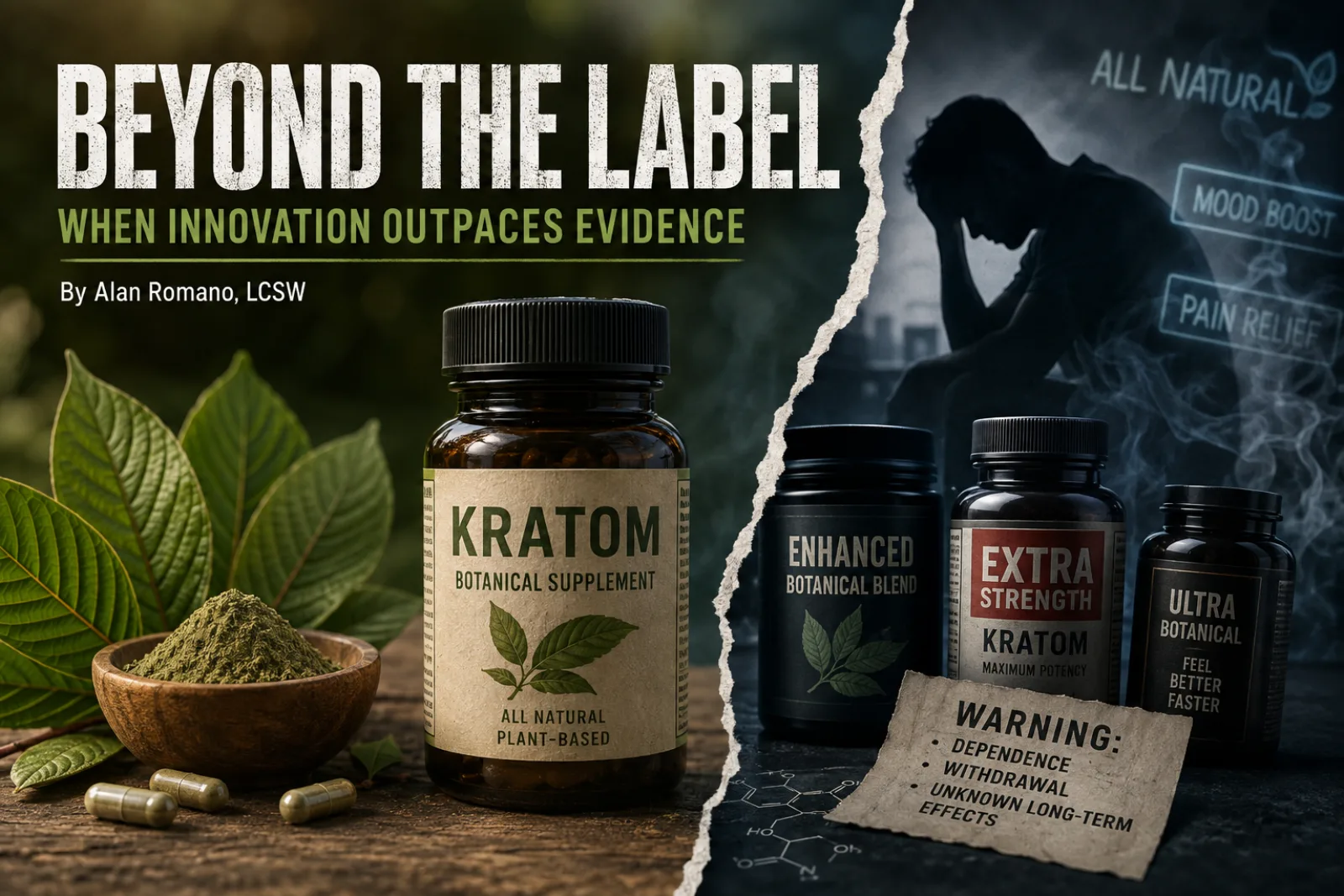
Cover art for Beyond the Label: When Innovation Outpaces Evidence, showing kratom leaves, powder and extract bottles beside a man with his head in his hand

Beyond the Label: Kratom, Herbal Supplements and Dependence

What the word herbal conceals, and why dependence is better read as a system finding its footing than as a moral failure.

Read Article
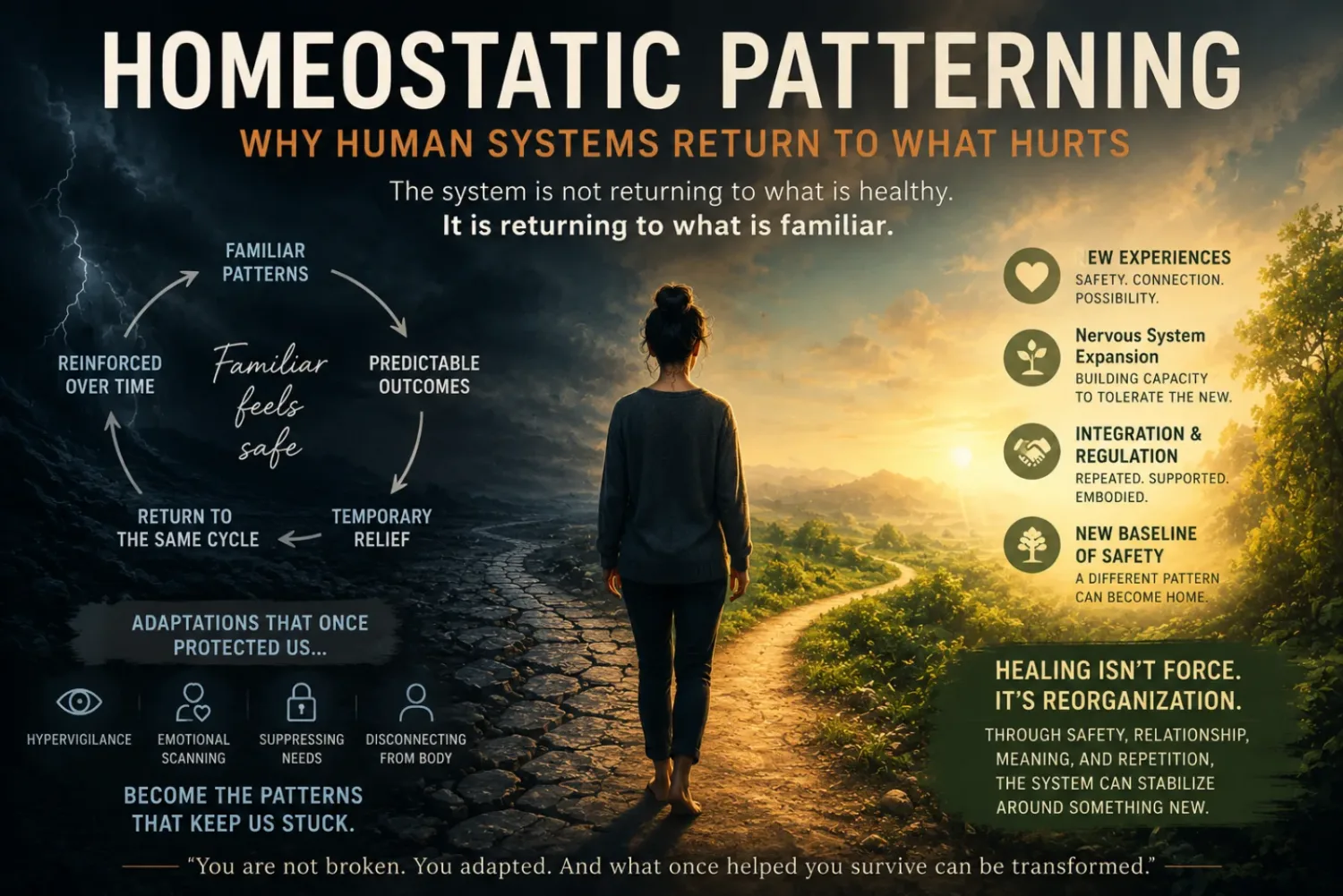
Infographic titled Homeostatic Patterning: Why Human Systems Return to What Hurts, with a woman walking a path between old patterns and new ones

Homeostatic Patterning: Trauma Therapy in Vero Beach, Florida

Why a pattern that no longer helps is still defended, and what changes in treatment when stability is read as the finding.

Read Article
Title card reading Understanding Substance Use from a Functional Systems Regulation Theory Lens, with the Psycholytic Services logo

7-OH Kratom Extracts and the Cost of Fear-Based Drug Narratives

Concentrated extracts are a real pharmacological change. Panic is still the wrong instrument for describing them.

Read Article
Title card reading PTSD Treatment in Vero Beach, Florida: A Systems-Based Approach to Healing

PTSD Treatment in Vero Beach, Florida: Why Traditional Therapy Isn't Always Enough

Insight arrives, the body does not follow. A systems account of why understanding a history is not the same as leaving it.

Read Article
Quote card reading: Most healing work doesn't fail because of the medicine. It struggles because the system doesn't have the capacity to hold what emerges.

Ibogaine and Opioid Use Disorder Treatment: A Systems-Based Perspective in Florida

A Schedule I substance, a desperate treatment gap, and the question the interest in it is actually asking.

Read Article
Infographic titled Trauma Therapy in Vero Beach, FL: An Integrative Approach to PTSD, Anxiety, Depression, and Substance Use, with a person meditating on a beach and a list of services

Trauma Therapy in Vero Beach, FL: A Systems-Based Approach to PTSD, Anxiety and Depression

Three diagnoses, one arrangement. What it means to treat the conditions a symptom is answering rather than the symptom.

Read Article

Featured in the press.

IbogaineAdvisor.com — July 2026

He Spent Years Looking for a Clinic He Could Trust. So He Built One.

In July 2026, IbogaineAdvisor.com published a long-form interview and clinic profile of Alan Romano, LCSW, co-founder of Plantas Sagradas in southern Tijuana, Baja California, Mexico, which he founded with Anna Canchola and which opened in May 2026. The conversation follows how he came to the work, his six years as an integration therapist, and Functional Systems Regulation Theory, the framework behind the books on this page. It also describes the clinic’s screening and medical-oversight protocols and its stated practice of turning away people it judges are not ready.

External coverage published by IbogaineAdvisor.com. It is not written by Psycholytic Services and does not describe services offered by this practice.

Read the interview on IbogaineAdvisor.com

Alan Romano is a licensed clinical social worker practicing in Vero Beach, Florida, and the author of the work described on this page. The writing is his own; it is not produced by an institution, it carries no endorsement, and it should be read as the position of one clinician developing a framework in public.

Nothing written here constitutes clinical advice, and no claim is made about the outcome of any treatment described in it.

If you are the person this is about

If you came looking for a book because you are trying to understand something that is happening to you, you do not need to read any of it before making contact. The work does not assume it.

What the books argue is simply that what you are dealing with is not a defect located inside you. If that is the part you needed to hear, the clinical pages are where to go next.