
Please note
Reading this site, or contacting me through it, does not create a therapist and client relationship. Nothing here is clinical advice for your situation.
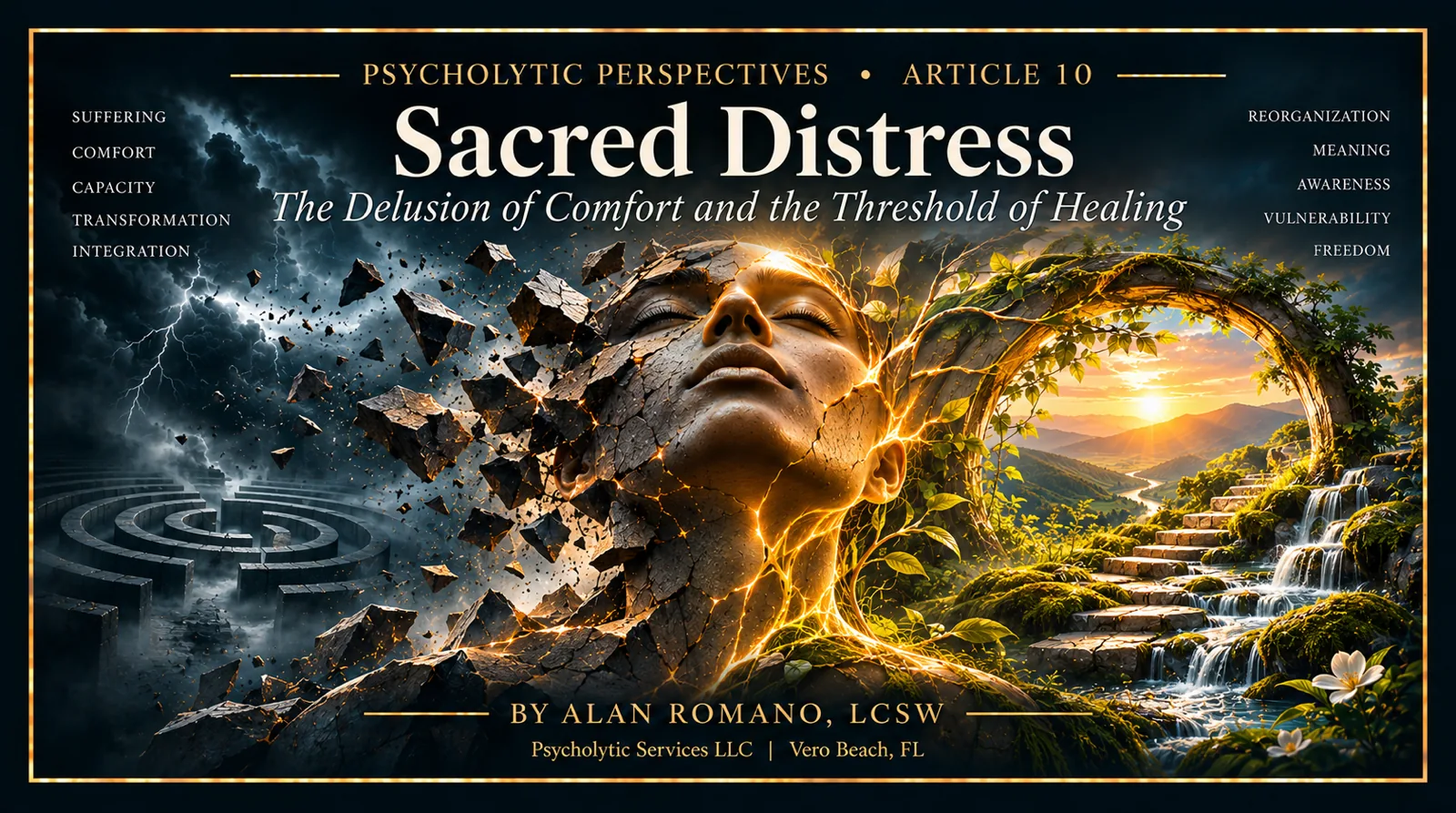
The Delusion of Comfort and the Threshold of Healing
Sacred distress
There is a peculiar mercy in molecular grace: the ability to soften suffering long enough to encounter what once felt unbearable. But mercy is not transformation, and the absence of pain cannot tell us whether the life that gave rise to it has changed.
BY ALAN ROMANO, LCSW · Psycholytic Services LLC | Vero Beach, Florida
The Comfort We Have Mistaken for Healing
There is something extraordinary about our ability to alter the human experience of suffering. We can anesthetize pain, reduce anxiety, interrupt depressive states, induce sleep, and create conditions in which experiences that once felt overwhelming become more manageable. These advances have transformed medicine and made meaningful recovery possible for countless individuals. Yet the very success of our ability to provide relief invites a question that is less frequently examined: What happens when the reduction in suffering becomes our primary understanding of what it means to heal?
Much of contemporary healthcare necessarily operates through identifiable symptoms, measurable outcomes, and interventions designed to restore functioning. These priorities serve important clinical purposes. Someone experiencing severe depression may need relief before they can meaningfully engage in relationships, work, or psychotherapy. Someone overwhelmed by persistent anxiety may require stabilization before they can begin examining the circumstances contributing to their distress. Research supports the relationship between symptom reduction and improvements in quality of life. Ecker et al. (2025), for example, found that reductions in depressive and anxiety symptoms helped explain improvements in health-related quality of life following brief cognitive behavioral therapy. Relief is therefore not separate from wellness, nor should its importance be diminished.
The difficulty emerges when relief becomes the endpoint of inquiry rather than part of a broader process. A person may experience meaningful improvement while returning to relationships, environments, and expectations that continue to place substantial demands upon their capacity to function. Treatment may reduce the immediate burden of distress without necessarily altering the conditions through which that distress developed or continues to be reinforced. This is not an argument that symptom reduction is superficial. It is a recognition that the experience of feeling better and the process of living differently, although closely related, are not always the same.
This distinction extends beyond the individual. Medical institutions operate within cultural environments that influence how suffering is understood, what outcomes are prioritized, and which forms of intervention become most accessible. At the same time, the services those institutions provide can shape public expectations about what treatment should accomplish. When rapid relief and restored productivity become prominent measures of success, the broader circumstances contributing to distress may receive comparatively less attention. The World Health Organization (2022) has emphasized that improving mental health requires not only strengthening clinical services but also changing the social and environmental conditions that influence psychological wellbeing.
Within Functional Systems Regulation Theory (FSRT), this relationship invites us to consider how individuals and institutions can become organized around preserving familiar forms of stability. An intervention may be effective at reducing suffering while the broader system continues operating in ways that reproduce the conditions requiring intervention. The question is not whether comfort has value, but whether our pursuit of comfort sometimes limits what we are willing to recognize, question, or change.
The Delusion of Comfort: When Feeling Better Is Not Becoming Well
Human beings are remarkably capable of adapting to circumstances that do not necessarily support their well-being. We learn to anticipate conflict, accommodate expectations, suppress emotional responses, and organize our behavior around maintaining connection, safety, or predictability. Over time, these strategies may become so familiar that their continued use feels less like adaptation and more like an ordinary expression of who we are. The resulting stability can be reassuring, even when maintaining it requires considerable psychological and physiological effort.
Within FSRT, the Delusion of Comfort describes the tendency to mistake familiar stability, reduced discomfort, or successful adaptation for genuine wellness. It does not suggest that comfort is inherently unhealthy or that suffering must accompany meaningful change. Rather, it challenges the assumption that because a system has become more comfortable within its existing organization, that organization has necessarily become more supportive of the life the individual wishes to live.
Consider someone who has spent years organizing their relationships around avoiding conflict. They may become highly skilled at recognizing the emotional states of others, anticipating disappointment, and adjusting their behavior to preserve connection. These capacities may have developed in circumstances where disagreement carried genuine relational consequences. As an adult, the same strategies may allow the person to maintain apparently stable relationships while limiting their ability to express needs, establish boundaries, or tolerate the uncertainty of being known more fully. The absence of conflict may feel like emotional safety, even when it depends upon the continued suppression of important aspects of the self.
This distinction becomes particularly relevant in treatment. An individual may demonstrate increasing emotional stability, accurately identify their triggers, describe effective coping strategies, and develop a thoughtful plan for maintaining recovery. They may report using those interventions successfully and genuinely experience themselves as doing well. These achievements deserve recognition. Yet the emotional, cognitive, behavioral, and relational patterns through which they have historically maintained stability may remain largely unchanged. The person has developed greater skill in managing their existing organization without necessarily developing the capacity to live beyond it.
The distinction proposed here concerns the possibilities that become available as a person develops greater flexibility within their existing patterns of adaptation. Within FSRT, meaningful progress involves more than managing familiar demands effectively. It includes developing the capacity to respond differently, particularly when established strategies limit authentic expression, relational engagement, or personal choice.
A person may become increasingly comfortable within the conditions that sustain their suffering, while mistaking that comfort for the freedom to live differently.
The Delusion of Comfort extends beyond individual behavior. Institutions, professional cultures, and social systems also develop familiar methods of preserving stability, often through established procedures, expectations, and measures of success. While these structures provide necessary consistency and accountability, they may also reinforce existing conditions without adequately examining whether those conditions support the wellbeing of the people within them.
Relief, stabilization, and adaptation remain essential, particularly when distress exceeds an individual's available capacity. The Delusion of Comfort emerges when these achievements become sufficient evidence that the underlying organization of suffering has changed. Learning to tolerate familiar circumstances more effectively is not always equivalent to developing the freedom to live differently.
This raises a particularly important question when we turn toward medicine-assisted treatment. If a substance can temporarily change the way pain, fear, and psychological experience are encountered, what does that altered experience make possible, and what remains unchanged when its effects begin to fade?
Molecular Grace: Ketamine and the Mercy of Medicine
Ketamine occupies a distinctive position in contemporary psychiatric medicine. Originally developed as a dissociative anesthetic, it has become an important intervention for certain depressive conditions while also opening new possibilities for medicine-assisted psychotherapy. Unlike classical serotonergic psychedelics, which act primarily through serotonin 5-HT2A receptors, ketamine principally acts through glutamatergic mechanisms involving NMDA receptors. Its anesthetic, analgesic, and dissociative properties can alter the ordinary relationship between bodily sensation, perception, and emotional experience. For some individuals, this creates an unusual opportunity to encounter difficult psychological material with a degree of distance from the responses that ordinarily accompany it.
There is a particular quality to this experience that I have come to think of as molecular grace. The phrase does not describe an established pharmacological mechanism, but a clinical and philosophical observation: that chemistry can sometimes provide a temporary form of mercy, allowing an individual to approach experiences that might otherwise exceed their available capacity. Pain may feel more distant, familiar emotional defenses may become less rigid, and previously inaccessible perspectives may become available. Yet ketamine does not uniformly produce comfort, nor does dissociation necessarily represent emotional processing. Experience can also involve fear, confusion, dysphoria, and physiological activation. The significance of medicine lies not in a guarantee of ease, but in its capacity to alter the conditions under which psychological experience unfolds.
This distinction is especially relevant within the American treatment landscape. Ketamine is federally approved as an anesthetic and may be prescribed off label for psychiatric purposes, while intranasal esketamine has received FDA approval for specified depressive indications. Their availability reflects distinct regulatory and clinical pathways rather than proof that their subjective effects are preferable to those of classical psychedelics. Nevertheless, Ketamine’s established place in medical practice makes it a revealing example of how an intervention can offer meaningful relief while raising broader questions about the relationship between altered consciousness and lasting psychological change.
Research examining ketamine alongside psychotherapy illustrates both the promise and the limitations of this approach. In a 2026 scoping review of 47 studies, Swainson et al. distinguished psychotherapy that directly incorporates the altered-state experience from structured psychotherapy provided alongside ketamine treatment. Although both approaches have generated encouraging findings, the evidence for experiential ketamine-assisted psychotherapy remains limited by small samples, observational designs, and a lack of appropriate comparison groups. More rigorous studies have provided some support for combining ketamine with established psychotherapeutic approaches, particularly cognitive behavioral therapy, although the additional contribution of psychotherapy requires further investigation (Swainson et al., 2026). A separate systematic review similarly identified promising outcomes across psychiatric conditions while emphasizing substantial variation in treatment models and limited evidence about their specific mechanisms (Veraart et al., 2026).
An FSRT perspective: Medicine as Scaffold
Within FSRT, medicine may provide temporary support that changes the conditions under which a person encounters psychological distress. This support can be valuable when it allows experiences, perspectives, or regulatory possibilities to become accessible without unnecessarily overwhelming the individual.
Medicine may create conditions for change, but it cannot live the changes on our behalf.
The significance of medicine-assisted treatment becomes clearer in what follows the experience: the capacities developed, the relationships through which change is supported, and the possibilities that become available in everyday life. Within FSRT, the question is not simply what medicine allows someone to experience, but what they become increasingly capable of living.
Ketamine's value should therefore not be diminished by its capacity to soften certain aspects of suffering. For someone whose distress has made psychological exploration inaccessible, that support may be essential. Yet its distinctive qualities also illuminate a larger question: If one medicine may make difficult experiences more approachable through pharmacological containment, what can we learn from traditions in which the encounter with discomfort takes a profoundly different form?
Beyond Comfort: Ayahuasca, Kambô, and the Meaning of Discomfort
Not every medicine tradition approaches psychological or physical suffering through the reduction of discomfort. Across different cultural and ceremonial contexts, some practices involve experiences characterized by intense bodily sensations, emotional confrontation, uncertainty, and, at times, purging. These encounters challenge the assumption that an intervention must feel comfortable to be considered meaningful. Yet they also expose an equally important danger: the temptation to interpret the intensity of an experience as evidence of its therapeutic value.
Ayahuasca offers one example. Traditionally used within Indigenous and other ceremonial contexts in South America, ayahuasca commonly combines plants containing N,N-dimethyltryptamine (DMT) with plants containing beta-carboline compounds that inhibit monoamine oxidase A, allowing DMT to become orally active. Its effects can include profound alterations in perception, autobiographical experience, emotional processing, and bodily awareness, frequently accompanied by nausea or vomiting. Within some traditions, purging carries meanings that extend beyond its physiological effects. These interpretations deserve cultural respect, although ceremonial significance should not be confused with demonstrated medical efficacy.
Contemporary research has begun examining whether ayahuasca experiences are associated with changes extending beyond the acute effects of the medicine. Haupt et al. (2026), in a systematic review of 18 prospective studies, identified reports of longer-term improvements across several psychological and wellbeing measures, including depressive symptoms, quality of life, and cognitive flexibility. However, much of the evidence came from observational studies involving self-selected participants, limiting conclusions about causation, generalizability, and the specific contribution of medicine. The findings are promising, but they do not establish that discomfort, purging, or the intensity of the experience produces therapeutic change.
Kambô introduces a substantially different encounter. Derived from the skin secretion of the Phyllomedusa bicolor frog, Kambô is used in certain Indigenous and contemporary ceremonial practices but is neither a classical psychedelic nor an established psychiatric treatment. Its bioactive peptides can produce rapid and sometimes severe physiological effects, including flushing, vomiting, changes in heart rate and blood pressure, and pronounced physical distress. Some participants describe a subsequent experience of calm, clarity, or bodily renewal as the acute effects subside. Such reports may be meaningful to those who experience them, but they do not demonstrate that Kambô resets the nervous system or produces lasting regulatory reorganization. Published case reports have also documented serious complications, including severe hyponatremia and persistent neuropsychiatric effects following Kambô exposure (Jauregui et al., 2025; Kelly et al., 2025).
The contrast between these medicines is therefore not a simple opposition between comfortable Western treatment and uncomfortable traditional healing. Ketamine can be psychologically challenging, ayahuasca experiences vary considerably, and Kambô’s acute physiological effects cannot be equated with the psychological processes associated with psychedelic therapy. Their pharmacology’s, cultural contexts, clinical evidence, and safety profiles differ substantially. What brings them into the same discussion is the question of how human beings interpret relief, discomfort, and the possibility of change.
The intensity of an experience tells us how much a system has endured, not how much it has healed.
The pursuit of healing can become distorted at either extreme. Just as relief may be mistaken for recovery, suffering may be elevated into evidence of transformation. In some approaches to healing, the willingness to endure increasingly difficult experiences can become a measure of progress, as though the depth of discomfort reveals the depth of change. Yet a difficult encounter may be meaningful without being beneficial, just as a comfortable encounter may be therapeutically valuable without producing lasting reorganization. Neither the presence nor the absence of suffering establishes that healing has occurred.
Within FSRT, Capacity Before Intensity establishes a necessary distinction between the magnitude of an experience and the resources available to encounter it. An experience that overwhelms an individual's physiological or psychological capacity does not become therapeutic simply because it is interpreted as meaningful. What matters is whether the demands placed upon the system can be met with sufficient internal resources, appropriate support, and conditions that allow the experience to be processed and integrated rather than merely endured.
The central question is not which medicine offers the greater challenge, nor whether comfort or discomfort is preferable. It is whether the experience occurs within conditions that protect the individual, respect their available capacity, and support changes that can be sustained beyond the immediate encounter. Without that distinction, the pursuit of healing can become another means of exposing vulnerable systems to demands they are not prepared to manage.
When Discomfort Becomes Danger: The Limits of Therapeutic Intensity
In clinical practice, distinguishing therapeutic challenge from harmful activation requires attention to the individual's changing physiological and psychological state. Difficult memories, emotional vulnerability, and unfamiliar sensations may arise during treatment, but their presence alone does not establish whether continued exploration is appropriate. Clinicians must consider observable signs of destabilization, the individual's ability to communicate and exercise choice, and whether the available support can adequately respond to emerging needs. These considerations become especially important when an intervention temporarily alters perception, judgment, or physiological functioning.
This distinction has important clinical implications. A systematic review and meta-analysis of classical psychedelic research involving 3,504 participants found that serious adverse events were uncommon in monitored research settings, although such events were reported among participants with preexisting neuropsychiatric conditions and adverse-event reporting was inconsistent (Hinkle et al., 2024). Guidance from the U.S. Food and Drug Administration (FDA) for psychedelic clinical investigations similarly emphasizes careful participant screening, appropriate monitoring, and safeguards for individuals who may remain vulnerable during and after acute drug effects (U.S. Food and Drug Administration, 2026). Together, these considerations underscore that neither the intensity of an experience nor the presence of a supportive environment is sufficient to establish its safety or therapeutic value. Clinical discernment requires ongoing attention to individual vulnerability, regulatory capacity, and the conditions under which an experience unfolds.
An FSRT perspective: Capacity Before Intensity
Within FSRT, therapeutic challenge must be considered in relation to the individual's available regulatory capacity and the conditions supporting that capacity. Meaningful change may involve uncertainty, emotional activation, and the disruption of familiar patterns, but the intensity of an intervention cannot substitute for clinical discernment.
An experience that exceeds capacity does not become healing simply because we give suffering meaning.
Capacity is neither fixed nor exclusively internal. It is influenced by physical health, psychological readiness, relational safety, preparation, and the availability of responsive support. Clinical responsibility therefore includes recognizing when an experience calls for accompaniment, when it requires modification, and when protection or medical intervention must take precedence over continued exploration. Within FSRT, the objective is not to eliminate every difficult experience, but to avoid confusing the endurance of distress with the development of greater capacity.
This distinction also raises a question extending beyond medicine-assisted treatment. If responsible care requires understanding the conditions under which distress emerges, what happens when treatment systems are organized primarily around reducing their observable symptoms rather than examining the circumstances that continue to produce it?
The Medicalization of Relief: Restoring Function Without Changing Conditions
Modern mental healthcare relies upon diagnosis, symptom assessment, and measurable treatment outcomes to guide clinical decisions and evaluate progress. These tools provide important structures, allowing clinicians to recognize deterioration, monitor interventions, and respond to changing needs. Yet the aspects of suffering that can be measured most readily are not always those that explain why suffering persists. Even advocates of measurement-based care recognize the importance of individualized recovery goals alongside symptom scales, while acknowledging that such outcomes can be more difficult to assess and compare across treatment settings (Fortney et al., 2017).
Within Functional Systems Regulation Theory, Regulatory Burden describes the cumulative demands placed upon an individual's capacity to maintain stability, including the ongoing physiological, psychological, and relational effort required to adapt to their circumstances. A person may become increasingly effective at managing anxiety, emotional exhaustion, or depressive symptoms while continuing to navigate the conditions that repeatedly generate those demands. This distinction is consistent with broader research demonstrating the influence of socioeconomic adversity and environmental conditions on psychological health (Lund et al., 2018). The World Health Organization (2022) similarly emphasizes that improving mental health requires attention to the environments in which people live, rather than relying exclusively on expanded access to clinical treatment.
This perspective also changes how we interpret the individual. Assume Intelligence Before Dysfunction, an FSRT clinical principle, invites us to examine the adaptive purposes of a response before reducing it to a symptom requiring correction. Withdrawal may have developed as protection against relational harm; hypervigilance may reflect prolonged exposure to unpredictability. Recognizing the possible intelligence within these adaptations does not deny their consequences or eliminate the need for treatment. It expands clinical inquiry beyond what the person is doing toward the conditions under which that response became necessary.
We may become remarkably effective at helping people function within conditions that are making them unwell, while remaining reluctant to question the conditions themselves.
The challenge for healthcare is not to abandon established measures of improvement, but to recognize their limitations. Clinical outcomes can demonstrate that an intervention has reduced distress or improved functioning without fully capturing whether the circumstances shaping that distress have changed. Attending to this distinction requires a broader understanding of recovery, one that considers the individual's lived conditions alongside measurable treatment outcomes.
A Culture Uncomfortable with Suffering
Our relationship with suffering is shaped not only by personal experience but also by the cultural environments in which we learn what it means to be well. In societies that place considerable value on productivity, efficiency, and emotional composure, distress can become difficult to accommodate when it disrupts the expected rhythms of daily life. These expectations are neither universal nor inherently unreasonable, but they can narrow the space available for experiences that require time, uncertainty, and forms of care that cannot be organized around immediate improvement.
These expectations influence how individuals interpret their own suffering. When productivity and emotional composure become closely associated with personal adequacy, the inability to maintain them may be experienced as failure rather than as a possible indication that something requires attention. Rest becomes difficult to justify, grief becomes something to manage privately, and persistent exhaustion may be normalized as the cost of fulfilling one's responsibilities. The concern is not that responsibility or resilience lack value, but that cultural definitions of functioning can leave little room to question the demands being sustained.
Within FSRT, this cultural tension reflects a broader expression of the Delusion of Comfort. Familiar ways of living may be preserved because they provide predictability, even when maintaining them requires considerable sacrifice. A person may learn to tolerate chronic overextension, suppress relational dissatisfaction, or accept increasingly restrictive expectations as an ordinary feature of adulthood. In such circumstances, the absence of acute distress can conceal the effort required to maintain a life organized around familiar limitations. The question is not whether people should become more comfortable with suffering, but whether our pursuit of comfort sometimes prevents us from recognizing what suffering reveals about the conditions of our lives.
This does not make distress inherently meaningful or suggest that people should remain in pain to discover its purpose. Some suffering requires immediate relief, protection, or medical intervention. Other experiences may invite reflection upon patterns that have become too familiar to question. The challenge lies in discerning the difference without assuming that every uncomfortable experience is pathological or that every painful experience carries a transformative lesson. It is within this distinction that the possibility of Sacred Distress begins to emerge.
Sacred Distress: When Familiar Patterns Begin to Unravel
There are moments in the healing process when the strategies that once made life manageable begin to lose their effectiveness. A person who has survived by avoiding conflict may discover that silence now carries a greater cost than confrontation. Someone who has organized their identity around being needed may begin to recognize the exhaustion beneath their usefulness. These realizations can be deeply unsettling, not because something has necessarily gone wrong, but because the familiar arrangements through which the individual has maintained stability are becoming increasingly difficult to sustain.
Within Functional Systems Regulation Theory, Sacred Distress describes the discomfort that may accompany the recognition, questioning, and gradual reorganization of established patterns of adaptation. The term sacred does not imply supernatural significance, moral virtue, or an obligation to suffer. Rather, it acknowledges that certain experiences of distress may hold personal significance because they bring an individual into contact with aspects of life that existing strategies have kept outside awareness or participation. The distress itself is not the healing. Its potential significance lies in what becomes possible when the individual can encounter it with sufficient safety, support, and freedom to respond differently.
An FSRT perspective: Sacred Distress
Within FSRT, Sacred Distress represents the discomfort of questioning familiar adaptations when their limitations become visible. Its potential for healing depends not on the severity of suffering, but on the capacity and conditions that make meaningful change possible.
Not all suffering is sacred. But sometimes, what we experience as the loss of stability is the beginning of discovering that stability was never the same as freedom.
Consider an individual who has spent years preserving relationships by suppressing personal needs. As greater awareness develops, the familiar relief of avoiding disagreement may give way to anxiety, grief, or uncertainty. The individual may initially feel less comfortable, even while becoming more capable of recognizing boundaries and making choices previously experienced as unavailable. This does not establish that distress is evidence of progress. Rather, it illustrates how questioning longstanding patterns can temporarily complicate the experience of wellbeing, even as new possibilities for living begin to emerge.
The clinical task is neither to eliminate such discomfort automatically nor to encourage its continuation in the name of growth. It is to understand what the experience represents, assess the individual's capacity to engage with it safely, and remain attentive to the conditions under which greater awareness becomes possible. Sacred Distress may mark an important encounter with the limitations of familiar adaptation, but the significance of that encounter ultimately depends upon what follows.
Beyond the Experience: Why Insight Is Not Reorganization
A profound realization can alter how a person understands their life without immediately changing how that life is lived. Someone may recognize the origins of a longstanding relational pattern, understand the protective function of an addictive behavior, or experience an unfamiliar sense of self-compassion. Such moments can be deeply meaningful. Yet when the individual returns to familiar relationships, responsibilities, and environments, the patterns organized around those conditions may remain largely intact. The challenge is no longer discovering what has been hidden, but developing the capacity to respond differently to what has become visible.
Within Functional Systems Regulation Theory, integration is the process through which insight becomes participation. This requires more than remembering an experience or preserving its emotional significance. It involves practicing unfamiliar responses, negotiating changing relationships, tolerating uncertainty, and gradually establishing conditions that support new ways of living. Research on psychedelic-assisted interventions increasingly examines the contribution of psychological support and psychotherapy to outcomes, although the specific mechanisms and optimal forms of integration remain incompletely understood (Florineth et al., 2026).
A realization becomes consequential when it begins to influence choices that were previously governed by familiar adaptations. The individual who recognizes a pattern of self-abandonment may begin expressing needs, establishing boundaries, or allowing relationships to change. These actions may appear ordinary compared with the experience that preceded them, yet they represent the practical work through which a different life becomes possible.
The enduring significance of an experience is therefore not determined by how extraordinary it felt, but by what becomes possible afterward.
From Survival to Participation: What Healing Makes Possible
Survival requires adaptation to the conditions immediately available. Over time, those adaptations may become so deeply organized that the individual continues responding to circumstances that have changed as though the original threats remain present. Healing, from an FSRT perspective, involves expanding the range of responses available beyond those that once served primarily to preserve safety and stability.
Participation Expansion describes this movement toward greater flexibility, agency, and engagement with life. Its expression may be modest: remaining present during disagreement, pursuing a meaningful relationship, returning to an abandoned interest, or making a decision without organizing it entirely around anticipated danger. These changes cannot always be captured by the disappearance of symptoms, yet they may reveal an important shift in how the individual relates to themselves and the world.
Participation does not mean constant activity, productivity, or social engagement. It includes the freedom to rest, decline demands, establish limits, and choose forms of involvement consistent with one's values and capacities. The objective is not to replace one set of expectations with another, but to expand the individual's ability to participate without being governed exclusively by previously necessary patterns of protection.
Healing becomes visible not simply in what a person no longer experiences, but in what they are increasingly free to choose.
The Next Threshold: Understanding How Reorganization Occurs
Across the first ten articles of Psycholytic Perspectives, we have examined human suffering through relationships, histories, environments, and regulatory patterns that shape its expression. This perspective challenges us to look beyond isolated symptoms and consider how individuals become organized around the conditions of their lives, often through adaptations that were once necessary but may no longer serve them.
Sacred Distress brings this inquiry to a turning point. We have considered the value of relief, the limitations of comfort, and the possibility that meaningful change may involve confronting what familiar patterns have allowed us to avoid. Yet understanding these dynamics leaves an essential question unanswered: What allows an established pattern of adaptation to change?
The next phase of Psycholytic Perspectives will move from understanding the organization of suffering toward examining the processes through which regulatory reorganization becomes possible. We will explore the conditions that support change, the relationships that sustain it, and the ways new patterns become established through lived experience.
The work of healing is not merely to make the familiar more bearable, but to make a different way of living possible.
A question for reflection
If relief from suffering does not always mean we have healed, and discomfort does not necessarily mean we are growing, how do we begin to recognize the difference between the distress that calls for relief, the distress that calls for change, and the distress that may accompany our becoming something more than we have learned to be?
Therapy outcomes vary from person to person. No result is promised or guaranteed.
About the author
Alan Romano, LCSW
Alan Romano, LCSW, is a Florida Licensed Clinical Social Worker and founder of Psycholytic Services LLC. His clinical work integrates trauma-informed psychotherapy, somatic approaches, Internal Family Systems (IFS), ketamine-assisted psychotherapy, and Functional Systems Regulation Theory (FSRT).
If you are the person this is about
If something in this article reflects what you have been experiencing, therapy can offer a place to understand the pattern with greater depth, safety, and compassion.
Psycholytic Services offers in-person therapy in Vero Beach and secure virtual therapy throughout Florida.
References
- Ecker, A. H., Shivaji, S., Plasencia, M., Kauth, M. R., Hundt, N. E., Fletcher, T. L., Sansgiry, S., & Cully, J. A. (2025). The role of symptom reduction in improving health-related quality of life through brief cognitive behavioral therapy. Psychotherapy Research, 35(6), 972–980. https://doi.org/10.1080/10503307.2024.2349992
- Florineth, G. A., Klima, I., Boeker, A. L., Catzeflis, P., Wopfner, A., Denier, N., Bracht, T., Adorjan, K., Pfammatter, M., Müller, F., & Soravia, L. M. (2026). Psychological therapy quantity and depressive symptom reduction in psychedelic-assisted therapy: A systematic review and meta-analysis. JAMA Network Open, 9(1), e2554843. https://doi.org/10.1001/jamanetworkopen.2025.54843
- Fortney, J. C., Unützer, J., Wrenn, G., Pyne, J. M., Smith, G. R., Schoenbaum, M., & Harbin, H. T. (2017). A tipping point for measurement-based care. Psychiatric Services, 68(2), 179–188. https://doi.org/10.1176/appi.ps.201500439
- Haupt, M. J., Carra, S., Boehnke, K. F., & Aday, J. S. (2026). Preliminary effects of ayahuasca on mental and physical health: A systematic review of prospective studies. Progress in Neuro-Psychopharmacology and Biological Psychiatry, 145, 111634. https://doi.org/10.1016/j.pnpbp.2026.111634
- Hinkle, J. T., Graziosi, M., Nayak, S. M., & Yaden, D. B. (2024). Adverse events in studies of classic psychedelics: A systematic review and meta-analysis. JAMA Psychiatry, 81(12), 1225–1235. https://doi.org/10.1001/jamapsychiatry.2024.2546
- Jauregui, R., Spiegler, K. M., & Kim, N. (2025). Chronic neuropsychiatric sequelae associated with kambo intoxication. JAMA Neurology, 82(4), 418–419. https://doi.org/10.1001/jamaneurol.2025.0008
- Kelly, T., Saponaro, A., Longenbach, J., Finkelberg, T., Giesa, C., Kleiman, E., Syed, H., Frederique, P., & Hamilton, R. J. (2025). Severe hyponatremia and syndrome of inappropriate antidiuretic hormone secretion after kambô ritual. Clinical Case Reports, 13(10), e71069. https://doi.org/10.1002/ccr3.71069
- Lund, C., Brooke-Sumner, C., Baingana, F., Baron, E. C., Breuer, E., Chandra, P., Haushofer, J., Herrman, H., Jordans, M., Kieling, C., Medina-Mora, M. E., Morgan, E., Omigbodun, O., Tol, W., Patel, V., & Saxena, S. (2018). Social determinants of mental disorders and the Sustainable Development Goals: A systematic review of reviews. The Lancet Psychiatry, 5(4), 357–369. https://doi.org/10.1016/S2215-0366(18)30060-9
- Swainson, J., Grewal, P., Polard, S., Borle, C., Gutierrez, G., Zhang, Y., Winkler, O., Burback, L., Khullar, A., McIntyre, R. S., Brietzke, E., & Soares, C. N. (2026). A scoping review: Ketamine or esketamine when used to assist psychotherapy or in combination with psychotherapy for the management of depression in adults. npj Mental Health Research, 5, Article 43. https://doi.org/10.1038/s44184-026-00226-1
- U.S. Food and Drug Administration. (2026). Psychedelic drugs: Considerations for clinical investigations: Guidance for industry. https://www.fda.gov/regulatory-information/search-fda-guidance-documents/psychedelic-drugs-considerations-clinical-investigations
- Veraart, J. K. E., Schimmers, N., Breeksema, J. J., Seybert, C., Kamphuis, J., Huber, L. F. T., Rota, A., Coerts, D. T., Oliveira-Maia, A. J., & Schoevers, R. A. (2026). Ketamine-assisted psychotherapies for mental disorders: A historical overview and systematic review. Clinical Psychology Review, 124, 102706. https://doi.org/10.1016/j.cpr.2026.102706
- World Health Organization. (2022). World mental health report: Transforming mental health for all. https://www.who.int/publications/i/item/9789240049338
Psycholytic Perspectives
Subscribe for updates on new Psycholytic Perspectives articles