
Please note
Reading this site, or contacting me through it, does not create a therapist and client relationship. Nothing here is clinical advice for your situation.
A nation afraid to feel: anxiety and the illusion of safety
Everyone else seems fine. Perhaps that is one of the most convincing lies we have learned to tell each other. Maybe the real problem is not that we are anxious, but that we have built lives around the expectation that we shouldn't be.
When anxiety becomes the problem
Anxiety is one of the most common symptoms that people seek mental health treatment, and for good reason. Anxiety can become exhausting and, at times, completely overwhelming. It can keep someone awake at night by replaying conversations that happened hours earlier or imagining problems that have not happened yet. It can make a person sit in their car outside of work trying to slow their breathing before walking through the door or turn an ordinary bodily sensation into the terrifying feeling that something terrible is about to happen. For some people, anxiety gradually begins restricting their world as they avoid relationships, airplanes, crowded stores, difficult conversations, medical appointments, driving, social situations, or sometimes leaving home altogether.
For someone experiencing severe anxiety, being told that anxiety is a normal part of being human can feel dismissive. There is nothing ordinary about a panic attack when you are convinced that you cannot breathe, and there is nothing comforting about lying awake at two in the morning with your heart racing while everyone else in the house is asleep. Anxiety disorders are real, and they can become profoundly disabling. Older national estimates reported by the National Institute of Mental Health suggest that nearly one in three American adults will experience an anxiety disorder at some point during their lifetime, while the World Health Organization estimates that hundreds of millions of people worldwide are currently living with one.
We should take that suffering seriously, but taking anxiety seriously does not necessarily mean treating anxiety itself as the enemy. Before asking how quickly we can make it disappear, there is another question worth asking: What function does this anxiety serve?
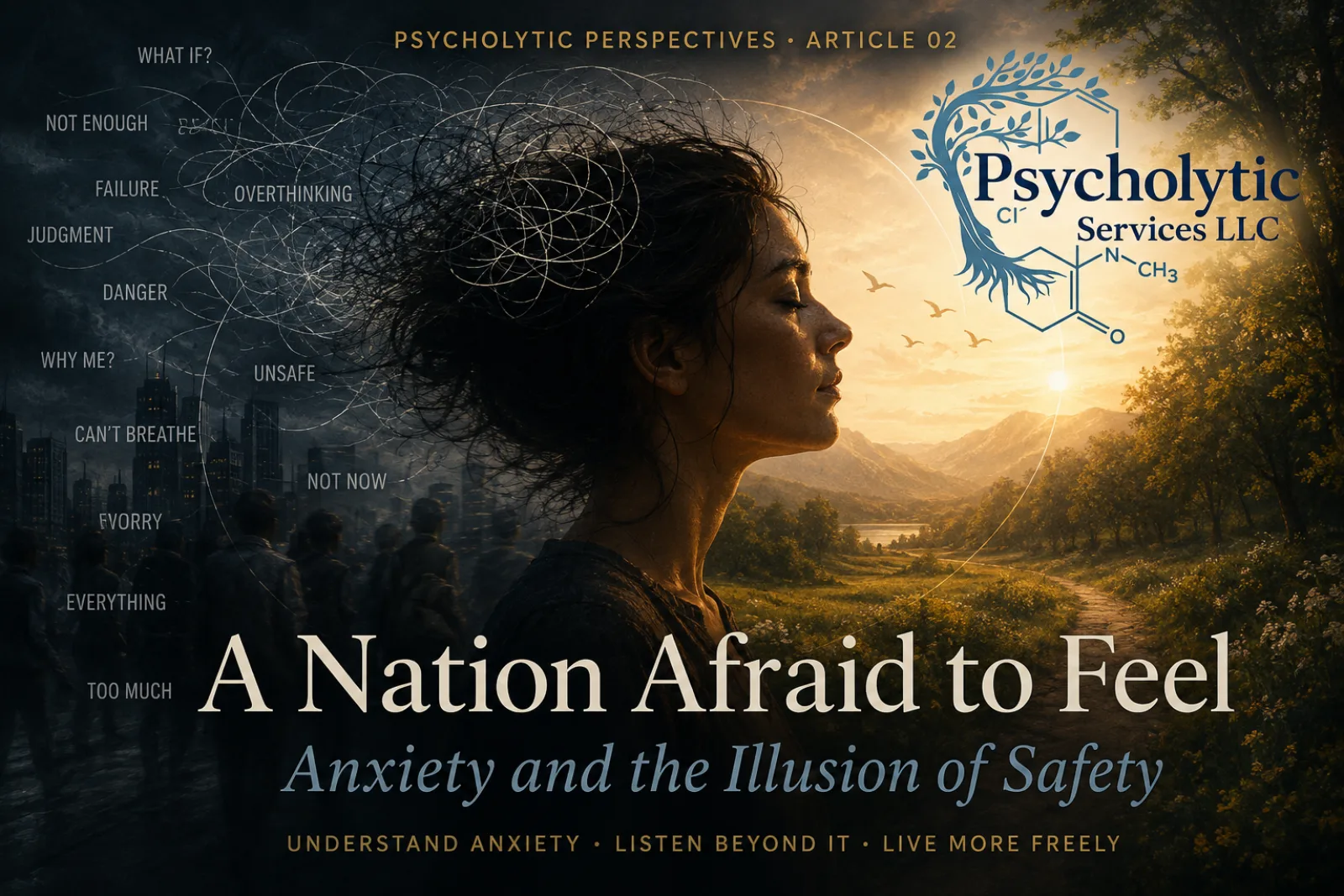
We need anxiety
Anxiety is not a mistake in human design. We need the ability to anticipate danger, recognize uncertainty, prepare for what might happen, and mobilize ourselves when something requires our attention. These capacities have helped human beings survive for as long as human beings have existed, and a person who was entirely incapable of anxiety would not necessarily be healthier. In many circumstances, they would be less capable of recognizing and responding to danger.
Imagine walking through a parking garage late at night and hearing footsteps rapidly approaching behind you. Your heart rate increases, your attention becomes focused, your muscles prepare for movement, and you become more aware of what is happening around you. You do not want to stop and intellectually debate whether those footsteps represent a statistically significant threat. Your body begins preparing you before you have fully determined what is happening.
The difficulty is that the systems involved in protecting us do not respond only to someone approaching us in a dark parking garage. They also respond to uncertainty, conflict, social rejection, financial instability, memories, bodily sensations, a partner becoming unusually quiet, a medical result we are waiting to receive, an email from the boss asking, 'Can we talk tomorrow?' or the growing recognition that something we have built our life around may no longer be working.
Modern neuroscience does not reduce anxiety to a single brain structure or one simple alarm switch. Anxiety involves interacting systems throughout the brain and body that help us anticipate and respond to potential threats. Those systems are necessary, but a system designed to protect us can become exhausting when it rarely receives enough information to believe that it can safely settle.
An FSRT perspective: anxiety is not the enemy
FSRT does not understand anxiety only as a symptom to be reduced or eliminated. Anxiety is part of the human regulatory system, helping us recognize uncertainty, anticipate danger, and respond to what may require our attention. The problem is not simply that we experience anxiety, but what happens when anxiety becomes so persistent or overwhelming that it begins organizing how we live. The goal, then, is not the elimination of anxiety, but the development of a healthier relationship with it. Sometimes anxiety is an alarm that needs to be recalibrated. Sometimes it brings our attention toward something within the Living Field that genuinely needs to be understood. Healing requires enough capacity to begin discovering the difference.
The life we were told we were supposed to have
Many of us grew up absorbing a fairly simple story about adulthood. We were told, directly or indirectly, to work hard, get an education, find a career, fall in love, buy a home, have a family if we wanted one, become financially secure, and make responsible decisions. If we followed that sequence successfully enough, somewhere along the way life was supposed to begin feeling settled.
Then adulthood arrives, and the reality is considerably more complicated. The bills keep coming, relationships require work, careers become exhausting, parents age, bodies change, children struggle, people get divorced, jobs disappear, and financial security does not necessarily produce the internal feeling of safety we imagined it would. Success does not automatically create meaning, and sometimes the person who did almost everything they were told to do begins quietly wondering why they do not feel the way they thought they were supposed to feel.
This is where the American Dream can become connected to what I have previously called the Delusion of Comfort. The problem is not wanting a home, career, financial stability, love, success, or comfort. There is nothing inherently wrong with any of these things. The delusion begins when we start believing that if we organize our lives correctly enough, achieve enough, acquire enough, or protect ourselves sufficiently, we will eventually reach a place where uncertainty, fear, loss, pain, and discomfort no longer have much of a role.
Life does not offer that kind of security. We can create greater safety, build stability, develop resources, and surround ourselves with people we trust, but we cannot remove uncertainty from the human condition. When we are conditioned to believe that we should be able to do so, ordinary human distress can begin feeling like evidence that something has gone wrong inside of us.
We have become remarkably good at organizing our lives in a way that looks like it should feel good, while quietly wondering why it does not.
The lie we mistake for normal
There is a statement I hear repeatedly in clinical work: "Everyone else seems to be doing fine." I have heard versions of it from people across ages, professions, income levels, and life circumstances. Everyone else seems able to handle life. Everyone else seems happy. Everyone else seems confident. Everyone else seems to know what they are doing, while somehow the person sitting across from me feels as though they are the only one struggling to keep everything together.
The problem with this comparison is that we experience ourselves from the inside while experiencing most other people from the outside. We know our fear, what happened in the argument the night before, what is actually in the bank account, the thoughts we have never told anyone, the loneliness we sometimes feel even when another person is lying beside us, what we regret, and what scares us. What we usually encounter from other people is what they are willing or able to show us.
Social media magnifies this difference. We see the vacation, promotion, new house, anniversary, smiling children, beautiful dinner, professional accomplishment, or photograph taken during thirty seconds of a twenty-four-hour day. We then compare our entire internal experience with selected moments from someone else's external life and wonder why we cannot seem to feel as good as everyone else appears to feel.
The original anxiety now gains another layer. The person moves from experiencing anxiety to wondering why they are so anxious, and eventually begins asking why they are anxious when everyone else seems to be doing fine. Shame enters the experience, and the conclusion can become painfully simple: There must be something wrong with me.
When a human emotion becomes a diagnosis
Being anxious does not automatically mean someone has generalized anxiety disorder, just as experiencing panic does not automatically mean someone has panic disorder and feeling sad does not automatically mean someone is clinically depressed. These are human emotions and experiences before they are diagnostic categories, and preserving that distinction is important.
This does not mean diagnoses are meaningless. Diagnoses can be extremely useful because they allow clinicians to communicate, organize research, guide treatment decisions, and help people obtain access to care. However, a diagnosis describes a recognizable pattern of symptoms. It does not necessarily tell us why that pattern developed in this particular person, at this particular point in their life. Understanding that requires context.
An FSRT perspective: a diagnosis is not the whole story
FSRT does not ask us to discard diagnosis. It asks us not to stop there. A person experiencing anxiety also has a body, relationships, history, work life, financial reality, culture, environment, patterns of sleep, physical health, medications, substances, losses, responsibilities, fears, values, and ways of making meaning. FSRT refers to this larger interconnected reality as the Living Field. Instead of asking only what symptoms a person has, we also ask what is happening within the life in which those symptoms develop.
The anxiety beneath the mask
When someone sits across from me and says, "I have anxiety," I believe them, but I also become curious about what they are calling anxiety and what may be contributing to the experience. Sometimes anxiety is exactly what it appears to be. Sometimes a person becomes frightened by their own bodily sensations and then increasingly afraid of experiencing those sensations again. Sometimes anxiety follows trauma, when the body continues preparing for something that happened before even though the circumstances of the person's life have changed.
At other times, what someone calls anxiety begins opening into something else. It may be grief that has never found somewhere safe to be grieved, anger that someone learned was unacceptable to express, loneliness that has been hidden beneath constant activity, exhaustion from a body that has not rested, a relationship that no longer feels safe, financial instability that no breathing exercise can eliminate, or a job someone dreads walking into every morning. It may develop in someone who has spent most of their life trying to keep everyone else happy, or in someone whose life looks successful from the outside while feeling increasingly empty from within.
There are also very practical factors that should not be overlooked. A person sleeping four hours a night, consuming large amounts of caffeine, taking certain medications or substances, experiencing withdrawal, living with a medical condition, or remaining under sustained environmental stress may experience significant anxiety without the explanation being entirely psychological.
This does not mean every anxious person has some hidden truth waiting to be uncovered. Sometimes anxiety itself has become the primary problem and needs direct treatment. The point is simply that we cannot know what anxiety means because we know what to call it. We have to understand the person who is experiencing it.
The illusion of success: when anxiety is rewarded as achievement
Imagine an attorney in their early forties who is successful by almost every conventional measure. They make good money, have a spouse and children, own a beautiful home, and are respected professionally. If they posted photographs of their life online, another person might look at those photographs and think, "I wish my life looked like that."
What almost nobody sees is the anxiety that has been present for years. Anxiety, however, has not only created suffering. It has also helped to move this person forward. They prepare more than everyone else, stay late, anticipate every possible problem, hate losing, and work constantly. When anxiety rises, they respond by working harder, preparing more, earning more, buying something, taking another case, or achieving another goal. Their anxiety has somewhere to go.
Because all that activity produces success, the surrounding world rewards it. Nobody necessarily says that this person appears anxious. Instead, they describe the person as driven, disciplined, committed, ambitious, and successful.
Then something changes. The attorney represents someone they increasingly believe committed a serious crime. They do their job well, find weaknesses in the case, advocate effectively, and achieve a favorable outcome for their client. Professionally, they succeeded, but afterward something feels different. They cannot stop thinking about the person who was harmed, and for perhaps the first time winning does not feel like success. The person begins questioning what they do, what they believe, and who they have become.
Then panic begins. It would be easy to say that the panic attacks suddenly appeared, but perhaps they did not appear out of nowhere. Perhaps something that had helped this person regulate themselves for years stopped working. Work had given their anxiety somewhere to go, but now work itself was creating an internal conflict that achievement could no longer settle.
Culture often recognizes dysregulation only after it interferes with productivity. Before that, the same pattern may be rewarded as ambition, discipline, achievement, or success.
The strange safety of familiar pain
The attorney may eventually find themselves caught between two experiences that seem contradictory. One part of them knows that they cannot continue living exactly as they have been living, while another part cannot imagine changing the life they have spent decades constructing.
Leaving a career does not simply mean finding another job. There may be a mortgage, children, health insurance, a spouse who depends partly on the income, a professional reputation built over twenty years, parents who proudly tell others that their child is an attorney, and an identity that has become inseparable from the profession. Beneath all of those practical concerns may be an even more frightening question: If I am not this person anymore, who am I? The familiar life may hurt, but changing it can be frightening too.
An FSRT perspective: homeostatic patterning
Human beings often return to what they know even when what they know is painful. FSRT calls this Homeostatic Patterning. A familiar way of living may be uncomfortable while still providing predictability. We know the rules, understand our role, and have learned how to survive there. Change asks us to move toward something we have not yet learned how to sustain. This is why anxiety can appear to pull in opposite directions. One part of the person recognizes that something needs to change while another part is terrified of changing anything at all. Both responses may be attempts to protect the person from different forms of pain.
When seeing clearly makes life harder
Eventually our attorney may begin understanding something they could not previously see. They entered therapy saying, "I need you to help me stop having panic attacks," but months later they may find themselves saying, "I don't know whether I want to do this anymore."
We usually think of that kind of insight as progress, and sometimes it is, but progress does not always feel good. Once we see something clearly, it becomes increasingly difficult to completely ignore it. The person now wakes up Monday morning knowing that the work they are about to do may be connected to what they are feeling, and that awareness can initially increase rather than decrease anxiety.
The problem is that insight does not tell the person what to do next. It does not pay the mortgage, create another career, tell their spouse what comes next, or erase twenty years of education and professional identity. It simply means they now know something that they did not fully know before.
An FSRT perspective: insight as burden
Sometimes learning why we are anxious makes us feel worse before it makes us feel better. FSRT describes this as Insight as Burden, when awareness develops faster than our ability to reorganize our lives around what we now understand. This can become particularly important in psychedelic and other intensive forms of therapy, where powerful insights may emerge quickly. Seeing something clearly does not mean we are ready to change it. Insight is not the same thing as capacity, and insight is not the same thing as integration. Insight may help us recognize what is no longer working, but it does not make the alternatives painless. In fact, seeing more clearly can leave us between two difficult realities: the pain of continuing to live in a way we now understand differently, and the uncertainty, loss, and discomfort that may come with changing it. At that point, the question is no longer simply whether something needs to change, but which discomfort we are willing to move through.
What path of pain are you willing to surrender to?
There is a question I sometimes ask people in therapy: What path of pain are you willing to surrender to?
I am not suggesting that someone needs to suffer, nor am I suggesting that people should remain miserable until they finally learn whatever lesson their anxiety supposedly contains. I am acknowledging that there are moments in life when every available path contains some degree of discomfort.
There may be pain in staying in a relationship that no longer works, but there may also be pain in leaving it. There may be pain in remaining in a career that feels increasingly empty, but there may also be enormous fear in walking away from financial security and professional identity. There may be pain in continuing to live according to other people's expectations, while choosing to live differently may bring the pain of disappointing people we love.
We often wait for another path to appear, one where nobody gets hurt, nothing is lost, uncertainty disappears, and we know in advance that everything will work out. Sometimes that path simply does not exist. The familiar pain has one significant advantage because we already know how to survive it.
This is one reason people sometimes continue doing something long after recognizing that it hurts. It does not necessarily mean they are resistant, lack insight, or are intentionally sabotaging themselves. Recognition and readiness are not the same thing, and sometimes the pain required to remain where we are has to become greater than the pain we anticipate change will require. Sometimes people return to the familiar pattern several times before they are ready to do something different. Therapy should be able to tolerate that.
The therapist is not the author
This is where self-determination becomes essential. If I believe the attorney's career is contributing to their anxiety, that does not give me the right to tell them to quit. I can ask questions, reflect what I am hearing, provide information, help them examine their values, recognize patterns, explore consequences, and build enough capacity to consider possibilities that previously felt impossible.
What I cannot do is decide which life they should live. That is not therapy. The therapist should never become the author of another person's life. Sometimes our responsibility is to help make what is already present more visible and then remain with the person while they decide what they are willing and able to do with that awareness.
When talking can only take us so far
Therapy can also become stuck in understanding anxiety intellectually. We can analyze childhood experiences, identify triggers, understand attachment, recognize patterns, discuss relationships, and explain the nervous system while remaining disconnected from what is happening in the person's body in the present moment.
Imagine our attorney becomes frustrated during a session and says, "So you're telling me my anxiety is good for me, and I should just suffer until I'm miserable enough to change my life?" I could defend the theory and explain what I meant, or I could notice the tension that has just entered the room. I might respond, "I'm reflecting back what you've told me, and I can feel something shifting in here right now. What are you noticing in your body?"
Maybe the person's chest feels tight, their jaw clenches, pressure develops behind their eyes, or their stomach begins to turn. Rather than immediately trying to make those sensations disappear, we become curious about them. We can notice where the sensation is located, what happens when attention moves toward it, whether it changes, and whether another emotion begins to emerge.
Perhaps after sitting with the experience for a moment, the person says, "I'm angry." Then something else comes forward. They tell me that they did everything they were supposed to do. They went to school, built the career, got married, bought the house, had children, earned the money, and became successful, yet they still feel miserable. Now we are somewhere different, not because I told the person what their anxiety meant, but because we created enough space for them to encounter their own experience.
The private lives behind public faces: the suffering we do not see
This brings us back to the person who believes everyone else is doing fine. Maybe everyone else is not doing fine. Maybe many of them are doing exactly what this person has been doing by functioning, producing, smiling, going to work, posting photographs, paying bills, taking children to school, answering emails, making dinner, and carrying an internal experience they rarely allow anyone else to see.
We talk a great deal about self-regulation, yet human regulation has never been an entirely solitary process. We learn regulation through relationships. Sometimes another person's calm helps us find our own. Sometimes saying something aloud makes it less frightening. Sometimes grief becomes bearable because somebody is willing to remain beside us while we grieve. Sometimes anxiety changes because we finally discover that the experience we were ashamed of is understood by another human being.
Research on social regulation supports this broader understanding. Trusted relationships can change how people experience threat and the effort required to manage it. We are not simply isolated nervous systems that occasionally interact with one another. Relationships are part of the environment in which human regulation occurs.
An FSRT perspective: the living field
FSRT understands human experience as emerging within a Living Field. We are continually shaped through the relationships between body, mind, family, work, culture, environment, history, meaning, and other people. Sometimes what changes anxiety is not something happening entirely inside the person. Sometimes something within the field changes. The person finally tells someone the truth, establishes a boundary, begins sleeping, asks for help, stops pretending, allows themselves to grieve, reconnects with someone, or makes one small change that creates enough capacity for another change to become possible. Healing does not always begin with dramatic transformation. Sometimes it begins when a person no longer has to carry the experience alone.
Lowering the volume without silencing the signal
None of this means we should allow severe anxiety to continue unchecked. Sometimes anxiety becomes too intense for someone to meaningfully listen to it. A person may not be sleeping, may experience repeated panic attacks, may become unable to work or leave home, or may watch their world become increasingly restricted because they are avoiding anything that could trigger another episode.
At that point, stabilization matters. Psychotherapy can help. Medication can help. Exposure-based approaches can help. Restoring sleep, movement, somatic work, medical evaluation, and supportive relationships can all be important depending upon the individual and their circumstances. Sometimes a person needs enough relief to regain the capacity to explore what is happening.
Benzodiazepines provide a useful example of why this requires nuance. Medications such as diazepam, lorazepam, clonazepam, and alprazolam can provide meaningful relief from acute anxiety in selected circumstances. There are moments when someone has crossed a threshold and reducing the intensity of the experience can help them regain enough capacity to function.
Relief, however, is not always the same thing as resolution. With ongoing benzodiazepine use, physical dependence, tolerance, withdrawal, and rebound symptoms become important considerations. This is why these medications require thoughtful prescribing, continued evaluation, and careful tapering when physical dependence has developed.
The point is not that medication is bad. The point is that our relationship with medication matters too. Something that helps us through an overwhelming moment can be valuable, while something we eventually believe we cannot function without may become part of the pattern that also needs to be understood.
Sometimes anxiety needs to become quieter before we can hear it clearly. The goal is not simply to silence the alarm, but to understand what keeps calling it into action.
Not every alarm means run
Perhaps we have been asking anxiety the wrong first question. Instead of beginning only with how to make it stop, we might become curious about what happens around the times it becomes louder.
Maybe Sunday night is always harder because Monday morning means returning to a job we dread. Maybe anxiety rises whenever a partner becomes distant because distance has become associated with abandonment. Maybe a person panics whenever their heart rate increases because they have become frightened of the sensation itself. Maybe the body is exhausted from inadequate sleep and constant stimulation. Maybe anxiety appears whenever someone is not accomplishing something because productivity has become the primary way they measure their worth. Maybe anxiety is preventing the person from taking a risk, or maybe it is bringing attention to something that genuinely needs to change. Several of these things may also happen at the same time.
The goal is not to romanticize anxiety. Anxiety can become disproportionate, self-perpetuating, debilitating, and in need of direct treatment. However, there is a difference between respecting anxiety and obeying it, just as there is a difference between treating anxiety and assuming it has nothing to tell us.
An FSRT perspective: intelligent signals
FSRT begins with a simple principle: responses contain information. A response can be painful, disruptive, or disproportionate to the present moment and still contain an underlying intelligence when understood within the context in which it developed. Anxiety may reflect something happening now, something learned before, or a regulatory pattern the system has come to rely upon. Understanding the intelligence within anxiety does not mean assuming the signal is always accurate or that it should remain unchanged. It means becoming curious about what the system may be responding to, protecting against, or attempting to regulate before simply demanding that the response stop.
Perhaps anxiety was never the enemy
Perhaps psychological health was never supposed to mean becoming fearless. Maybe maturity is not reaching some point where uncertainty finally disappears, and perhaps regulation does not mean learning how to remain comfortable regardless of what life brings.
Sometimes anxiety needs treatment, medication, exposure, sleep, medical evaluation, another person, a boundary, grief, or action. Sometimes several of those things are necessary at once. At other times, anxiety needs to be listened to before anyone decides what it needs.
That is the difficult part because there is no single explanation for anxiety, just as there is no single human life. Sometimes healing means helping someone return to the life they were living, while at other times healing means helping someone become stable enough to recognize that they cannot return to that life in the same way.
Anxiety can push us toward change while simultaneously making us terrified of changing. It can protect us from danger while sometimes protecting us from possibilities that are unfamiliar. It can become debilitating and require treatment while still containing information about the life, relationships, body, history, and environment in which it develops.
We do not have to glorify suffering to become curious about it. We do not have to refuse treatment to listen, and we do not have to eliminate every uncomfortable human emotion in order to call ourselves well.
Perhaps we can begin somewhere simpler. The next time anxiety appears, before immediately asking how to make it disappear, we might simply become curious.
A question for reflection
If you stopped asking only how to make your anxiety disappear, what might you begin to understand about the life in which it developed?
References
- American Psychiatric Association. (2022). Diagnostic and statistical manual of mental disorders (5th ed., text rev.). American Psychiatric Association Publishing.
- American Society of Addiction Medicine. (2025). The joint clinical practice guideline on benzodiazepine tapering: Considerations when benzodiazepine risks outweigh benefits.
- Coan, J. A., & Sbarra, D. A. (2015). Social baseline theory: The social regulation of risk and effort. Current Opinion in Psychology, 1, 87–91.
- Du, M., Zhao, C., Hu, H., Ding, N., He, J., Tian, W., Zhao, W., Lin, X., Liu, G., Chen, W., Wang, S., Wang, P., Xu, D., Shen, X., & Zhang, G. (2024). Association between problematic social networking use and anxiety symptoms: A systematic review and meta-analysis. BMC Psychology, 12, Article 263.
- National Institute of Mental Health. (n.d.). Any anxiety disorder. National Institutes of Health.
- Shackman, A. J., Grogans, S. E., & Fox, A. S. (2024). Fear, anxiety and the functional architecture of the human central extended amygdala. Nature Reviews Neuroscience, 25, 587–588.
- U.S. Food and Drug Administration. (2020, September 23). FDA requiring boxed warning updated to improve safe use of benzodiazepine drug class.
- World Health Organization. (2025, September 8). Anxiety disorders.
Designed and typeset by Alan Romano, LCSW.
If you are the person this is about
If anxiety has been shaping more of your days than you want it to, this is the kind of work I do. Not arguing you out of it, but helping you understand what it is doing and what it may be asking of your life.
You will not be asked to learn this vocabulary in order to do the work. The clinical pages describe what it actually looks like from the inside.
Psycholytic Perspectives
A new essay roughly every Monday. The PDF lands in your inbox the morning it goes up.