ABOUT
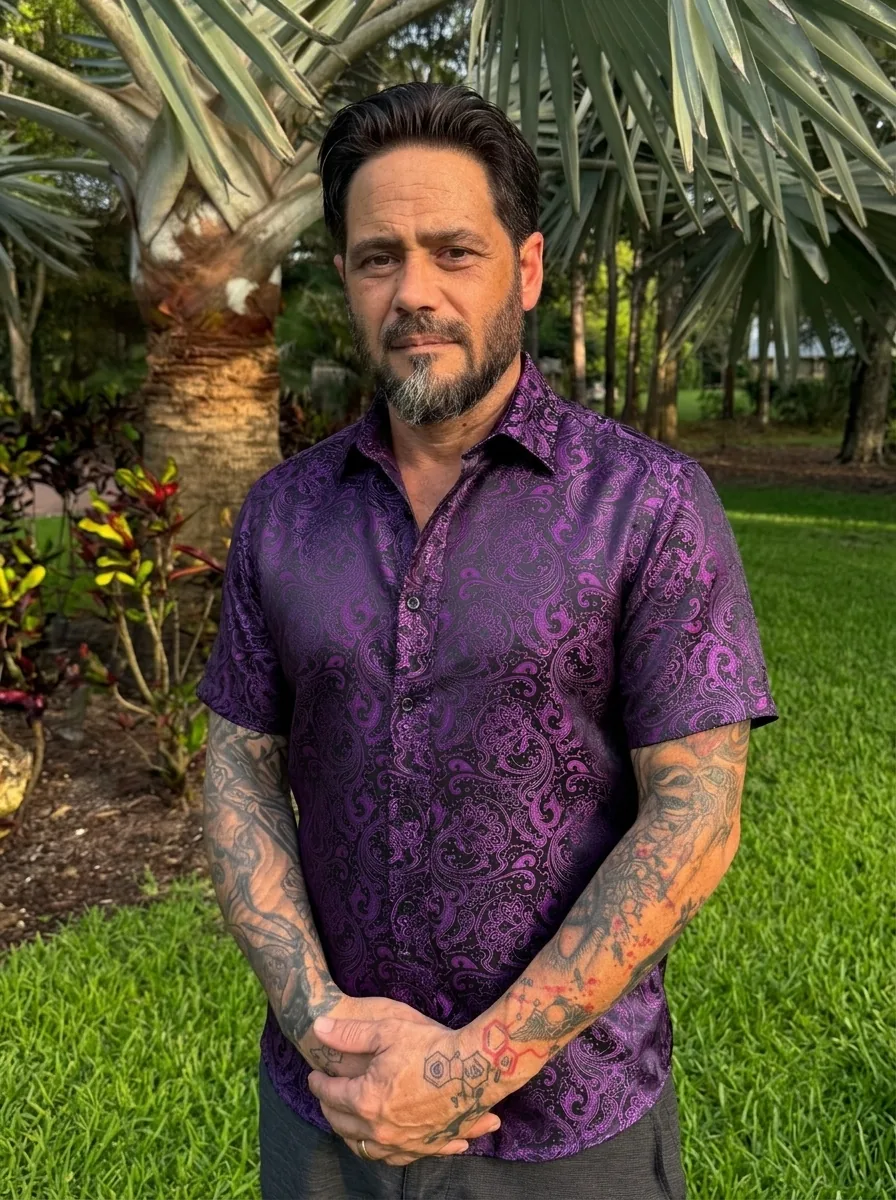
Alan Romano, LCSW
A licensed clinical social worker in Vero Beach, Florida, working with trauma, attachment and the systems people live inside.
I am a licensed clinical social worker with a Master of Social Work. I began working in behavioral health in 2017, providing counseling in substance use treatment, practiced as a registered clinical social work intern from 2020 to 2023, and have been fully licensed as an LCSW since 2023. I work with adults carrying trauma, including people who have been in therapy before and found that it did not reach the thing they came for.
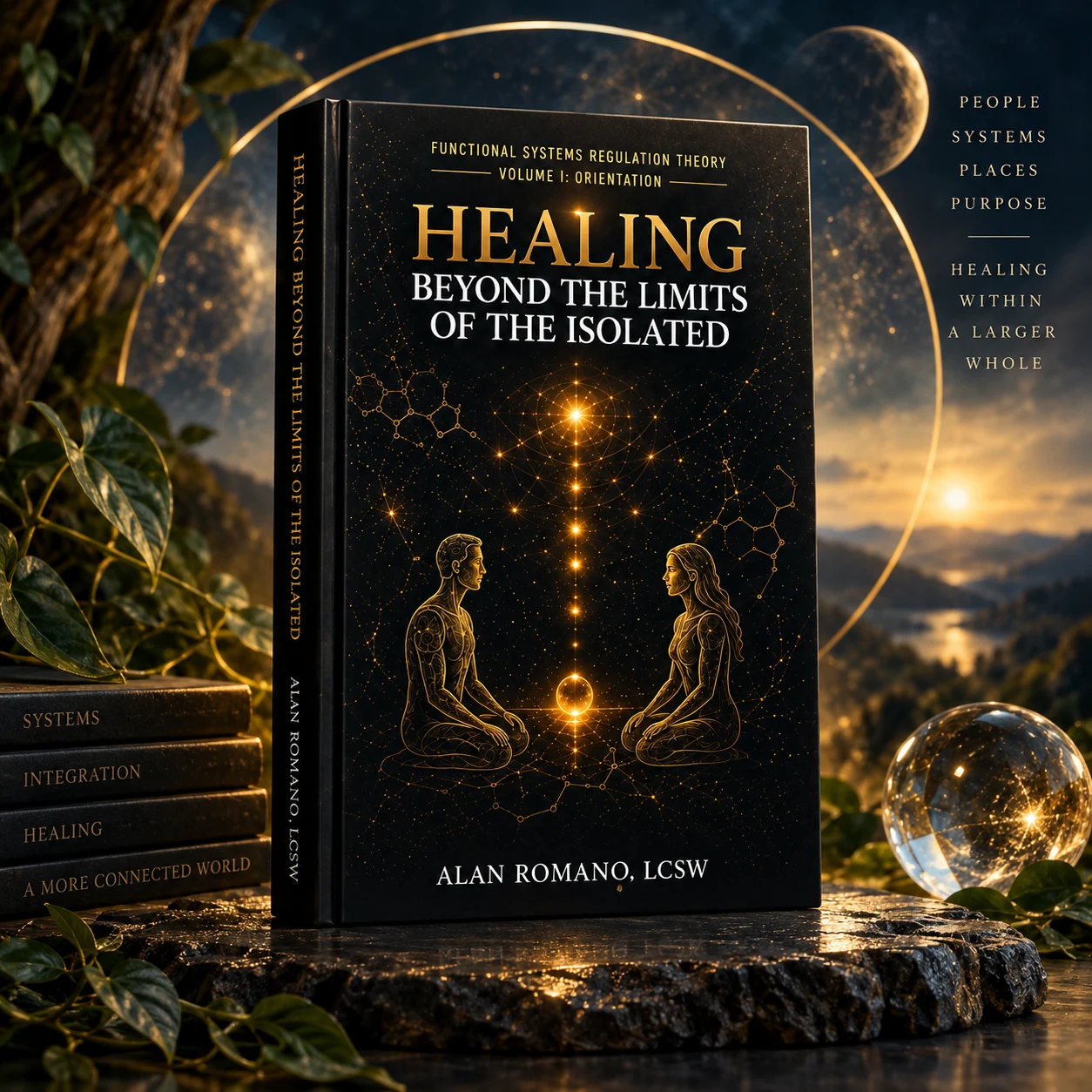
In July 2026 I published Healing Beyond the Limits of the Isolated, a book arguing that distress is rarely contained by the person who carries it. Much of my practice grew out of the questions that book left open.
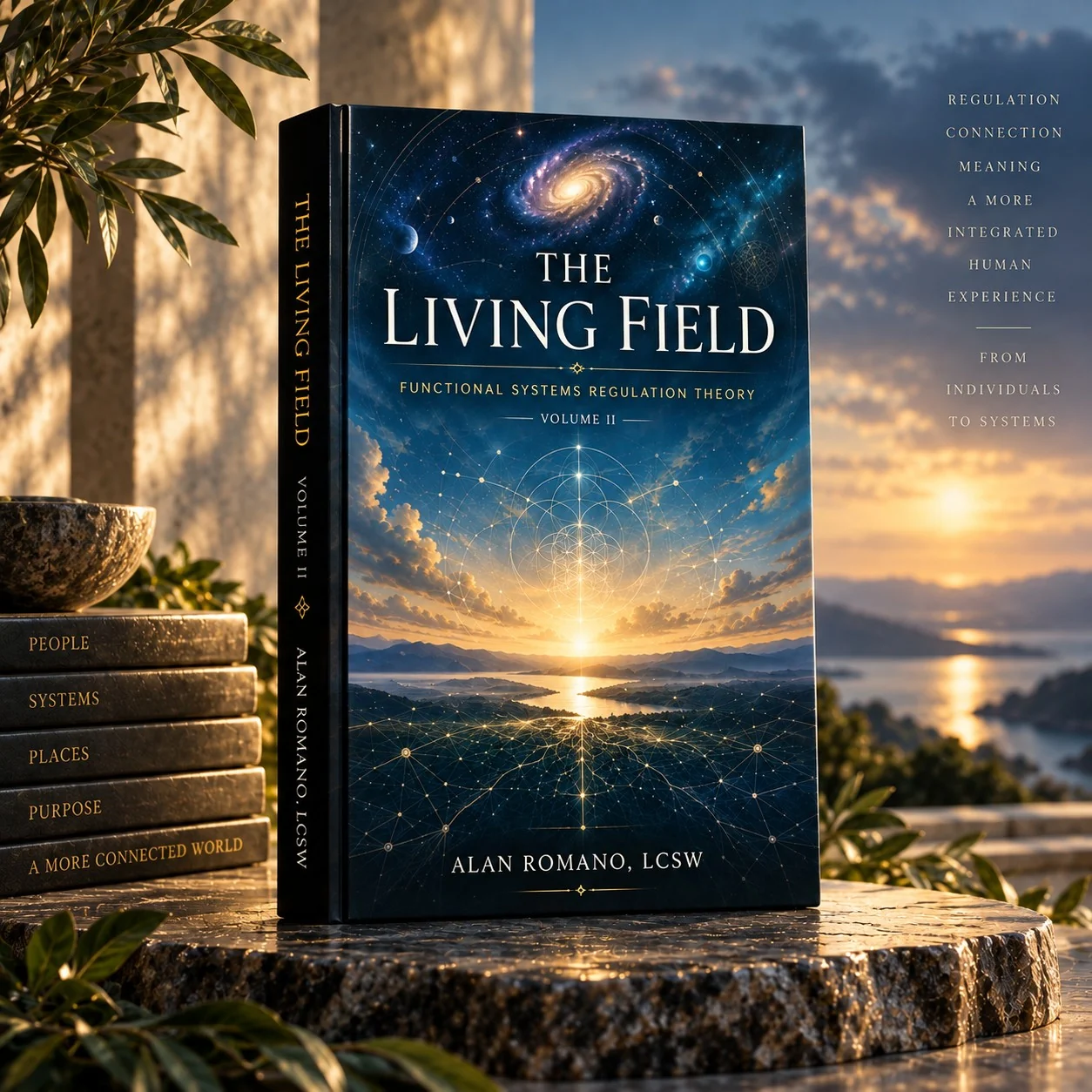
I am currently developing an integrative framework called Functional Systems Regulation Theory, and writing a second book, The Living Field. The work sits at the intersection of trauma, attachment, neuroscience and systems thinking, and it stays close to the clinical room rather than above it.
In session I am direct, unhurried, and interested in what your particular life is actually made of. I do not treat people as case types, and I do not promise outcomes. I describe how the work proceeds and let you judge whether it fits.
- Credentials
Licensed Clinical Social Worker (LCSW)
Master of Social Work (MSW)
Certified Psychedelic-Assisted Therapy Provider, Integrative Psychiatry Institute, Boulder, CO
Psilocybin-assisted therapy provider training, Experiential Training Institute, the Netherlands
In behavioral health since 2017; licensed as an LCSW since 2023
Vero Beach, Florida
Two books, one question.
Healing Beyond the Limits of the Isolated asks what changes when we stop treating a person as the sole location of their suffering. It is written for readers, not only for clinicians.
The Living Field, in progress, develops Functional Systems Regulation Theory: an attempt to describe regulation as something that happens between people and environments, not only within a nervous system.
Healing is not something that happens in isolation. It emerges across systems, the body, relationships, environment, and lived experience.
That sentence is the closest thing I have to a first principle, and everything else in this practice follows from it. It is not a comforting slogan about togetherness. It is a claim about where distress is actually held, and therefore about where it can actually change.
A person is not a sealed unit that happens to be surrounded by circumstances. The body responds to the room, the room is arranged by the people in it, the people are shaped by the demands and histories they arrived with, and all of that feeds back into the body again. When someone tells me they have understood their history thoroughly and still cannot sleep, this is usually why. The understanding landed in one part of the arrangement and the rest of it carried on unchanged.
So the work is not confined to the hour, and it does not treat your life outside the hour as background information. What you go home to on a Thursday evening is part of the treatment whether or not we name it.
Not symptoms, organization
Rather than focusing only on symptoms, this approach attends to how your system has learned to organize around stress, protection, and survival.
These patterns are not mistakes. They are intelligent adaptations shaped by what your system has needed to endure.
I mean that literally, not kindly.
The vigilance that exhausts you was, at some point, accurate. The numbness that worries the people who love you was, at some point, the only available way through. The habit of managing everyone else's mood before your own was learned in a setting where it genuinely worked.
None of that stops being adaptive because it has outlived the conditions that produced it; it simply stops being needed, which is a different thing and a harder one to convince a nervous system of.
Working this way changes the questions in the room. Instead of asking how to remove a behavior, we ask what it is doing, when it began, and what conditions still make it sensible. That tends to lower the shame considerably, and shame is one of the main reasons people stay stuck in patterns they can already describe perfectly well.
It also changes the pace. If a pattern is protective, dismantling it quickly is not progress. The work is to build enough capacity and enough safety around you that the protection is no longer required, and then to let it loosen at whatever rate it loosens.
License and scope of practice
Alan Romano, LCSW is licensed by the Florida Board of Clinical Social Work, Marriage and Family Therapy and Mental Health Counseling, license SW21072. He works only with clients who are physically located in Florida at the time of session. He is not licensed to practice in any other state.
Book a free consultation